The Rise of Smart Factories Powered by AI Automation
By Zeeshan Ahmed Team • Sep 27, 2025
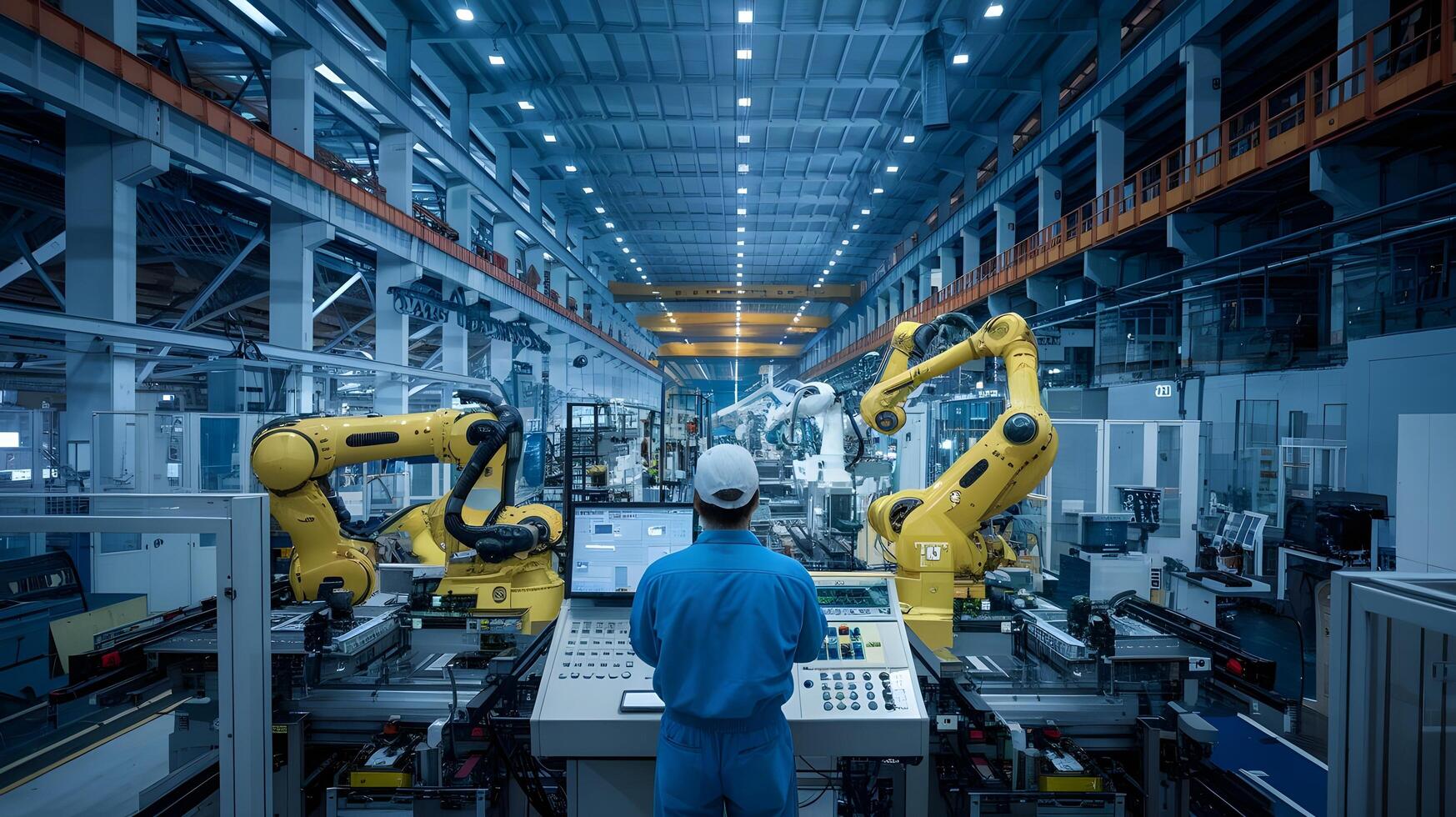
The manufacturing landscape is undergoing its most significant transformation since the first industrial revolution. This new era, often called Industry 4.0, is defined by the rise of the "smart factory." Unlike the automated facilities of the 20th century, which were programmed for repetitive tasks, a smart factory is an intelligent, interconnected, and adaptive ecosystem. The driving force behind this evolution is artificial intelligence, which acts as the central brain, turning automation from a rigid tool into a dynamic, self-optimizing partner.
A smart factory operates as a cyber-physical system, where a constant flow of data from physical machinery is analyzed by powerful AI algorithms to make autonomous decisions. This integration of machinery, data, and intelligence is creating unprecedented levels of efficiency, quality, and flexibility.
The Core Components of AI-Driven Automation
The smart factory is not built on a single technology but on the convergence of several key AI-powered components:
1. The Industrial Internet of Things (IIoT)
The IIoT is the factory's "nervous system." It is a massive network of sensors, cameras, and gateways embedded in every machine, assembly line, and material. These sensors collect a constant, real-time torrent of data on everything from temperature and vibration to energy consumption and cycle speed. This data stream is the raw material that AI needs to learn, predict, and act.
2. AI-Powered Predictive Maintenance
One of the most immediate and valuable applications of AI in a factory is the elimination of unplanned downtime.
Traditional Model: Machines were either fixed after they broke (reactive) or serviced on a fixed schedule (preventative), often leading to wasted parts or unexpected failures.
Smart Model: AI-driven predictive maintenance models analyze the data from IIoT sensors to learn the "normal" operating signature of a piece of equipment. The AI can detect subtle, microscopic anomalies—a slight change in a motor's vibration or a fractional temperature increase—that are precursors to failure. The system can then predict a breakdown weeks in advance, automatically scheduling maintenance at the most convenient time and ordering the specific part needed. This maximizes uptime, reduces maintenance costs, and extends the life of expensive assets.
3. Intelligent Robotics: Cobots and AMRs
AI has fundamentally changed industrial robotics.
Collaborative Robots (Cobots): Traditional robots operate inside safety cages, as they are "unaware" of their surroundings. AI-powered cobots are equipped with advanced sensors and computer vision, allowing them to work safely alongside human employees. They can be "taught" new tasks easily and handle strenuous, repetitive, or dangerous jobs, freeing human workers to focus on more complex tasks like quality assurance and system oversight.
Autonomous Mobile Robots (AMRs): In the past, automated vehicles followed fixed magnetic tape on the floor. AI-powered AMRs, however, use LiDAR and cameras to map the factory and navigate dynamically. They can understand their tasks, find the most efficient route, and safely maneuver around people, forklifts, and other obstacles to transport materials and finished goods.
4. AI-Powered Quality Control
Human inspection, especially on high-speed lines, is prone to fatigue and error. AI-driven computer vision systems have revolutionized quality control. High-resolution cameras, powered by deep learning algorithms, scan every product on the assembly line. These systems can detect microscopic defects, such as hairline cracks, incorrect soldering on a circuit board, or color inconsistencies, with superhuman speed and accuracy. Any defective item is automatically flagged and removed, ensuring that product quality is near-perfect and dramatically reducing material waste and scrap.
5. The Digital Twin
The digital twin is a virtual, real-time replica of a physical asset, a production line, or the entire factory. The IIoT sensors on the physical machines feed data to the AI, which keeps the digital version perfectly synchronized. This creates a risk-free virtual environment where the AI can:
Simulate Changes: Test new workflows or machine settings to find the most efficient configuration without ever stopping the real production line.
Optimize Performance: Run millions of "what-if" scenarios to discover the optimal production schedule or energy consumption plan.
Train Operators: Allow new employees to learn how to operate complex machinery in a safe, virtual setting.
The Benefits of the AI-Powered Smart Factory
The shift to AI-driven automation is not just a technological upgrade; it is a profound business strategy that delivers tangible results.
Unprecedented Efficiency: By predicting downtime, optimizing workflows, and automating material flow, AI minimizes bottlenecks and ensures operations run 24/7 at peak performance.
Enhanced Flexibility: A smart factory can adapt to change in real-time. If a surge in demand for a specific product occurs, the AI can instantly reconfigure production schedules and robotics to meet it. This also enables mass customization, where the factory can efficiently produce personalized products on a large scale.
Superior Quality and Reduced Waste: With AI handling quality control, defects are caught at their source. This not only improves the final product but also saves an enormous amount of money on wasted materials and rework.
Improved Worker Safety: By automating dangerous, strenuous, and repetitive tasks, AI creates a safer work environment. This shifts the human role from manual labor to that of a "knowledge worker" who manages, optimizes, and maintains the intelligent systems.
A smart factory operates as a cyber-physical system, where a constant flow of data from physical machinery is analyzed by powerful AI algorithms to make autonomous decisions. This integration of machinery, data, and intelligence is creating unprecedented levels of efficiency, quality, and flexibility.
The Core Components of AI-Driven Automation
The smart factory is not built on a single technology but on the convergence of several key AI-powered components:
1. The Industrial Internet of Things (IIoT)
The IIoT is the factory's "nervous system." It is a massive network of sensors, cameras, and gateways embedded in every machine, assembly line, and material. These sensors collect a constant, real-time torrent of data on everything from temperature and vibration to energy consumption and cycle speed. This data stream is the raw material that AI needs to learn, predict, and act.
2. AI-Powered Predictive Maintenance
One of the most immediate and valuable applications of AI in a factory is the elimination of unplanned downtime.
Traditional Model: Machines were either fixed after they broke (reactive) or serviced on a fixed schedule (preventative), often leading to wasted parts or unexpected failures.
Smart Model: AI-driven predictive maintenance models analyze the data from IIoT sensors to learn the "normal" operating signature of a piece of equipment. The AI can detect subtle, microscopic anomalies—a slight change in a motor's vibration or a fractional temperature increase—that are precursors to failure. The system can then predict a breakdown weeks in advance, automatically scheduling maintenance at the most convenient time and ordering the specific part needed. This maximizes uptime, reduces maintenance costs, and extends the life of expensive assets.
3. Intelligent Robotics: Cobots and AMRs
AI has fundamentally changed industrial robotics.
Collaborative Robots (Cobots): Traditional robots operate inside safety cages, as they are "unaware" of their surroundings. AI-powered cobots are equipped with advanced sensors and computer vision, allowing them to work safely alongside human employees. They can be "taught" new tasks easily and handle strenuous, repetitive, or dangerous jobs, freeing human workers to focus on more complex tasks like quality assurance and system oversight.
Autonomous Mobile Robots (AMRs): In the past, automated vehicles followed fixed magnetic tape on the floor. AI-powered AMRs, however, use LiDAR and cameras to map the factory and navigate dynamically. They can understand their tasks, find the most efficient route, and safely maneuver around people, forklifts, and other obstacles to transport materials and finished goods.
4. AI-Powered Quality Control
Human inspection, especially on high-speed lines, is prone to fatigue and error. AI-driven computer vision systems have revolutionized quality control. High-resolution cameras, powered by deep learning algorithms, scan every product on the assembly line. These systems can detect microscopic defects, such as hairline cracks, incorrect soldering on a circuit board, or color inconsistencies, with superhuman speed and accuracy. Any defective item is automatically flagged and removed, ensuring that product quality is near-perfect and dramatically reducing material waste and scrap.
5. The Digital Twin
The digital twin is a virtual, real-time replica of a physical asset, a production line, or the entire factory. The IIoT sensors on the physical machines feed data to the AI, which keeps the digital version perfectly synchronized. This creates a risk-free virtual environment where the AI can:
Simulate Changes: Test new workflows or machine settings to find the most efficient configuration without ever stopping the real production line.
Optimize Performance: Run millions of "what-if" scenarios to discover the optimal production schedule or energy consumption plan.
Train Operators: Allow new employees to learn how to operate complex machinery in a safe, virtual setting.
The Benefits of the AI-Powered Smart Factory
The shift to AI-driven automation is not just a technological upgrade; it is a profound business strategy that delivers tangible results.
Unprecedented Efficiency: By predicting downtime, optimizing workflows, and automating material flow, AI minimizes bottlenecks and ensures operations run 24/7 at peak performance.
Enhanced Flexibility: A smart factory can adapt to change in real-time. If a surge in demand for a specific product occurs, the AI can instantly reconfigure production schedules and robotics to meet it. This also enables mass customization, where the factory can efficiently produce personalized products on a large scale.
Superior Quality and Reduced Waste: With AI handling quality control, defects are caught at their source. This not only improves the final product but also saves an enormous amount of money on wasted materials and rework.
Improved Worker Safety: By automating dangerous, strenuous, and repetitive tasks, AI creates a safer work environment. This shifts the human role from manual labor to that of a "knowledge worker" who manages, optimizes, and maintains the intelligent systems.