The Impact of AI on Job Creation and Workforce Skills
By Zeeshan Ahmed Team • Sep 27, 2025
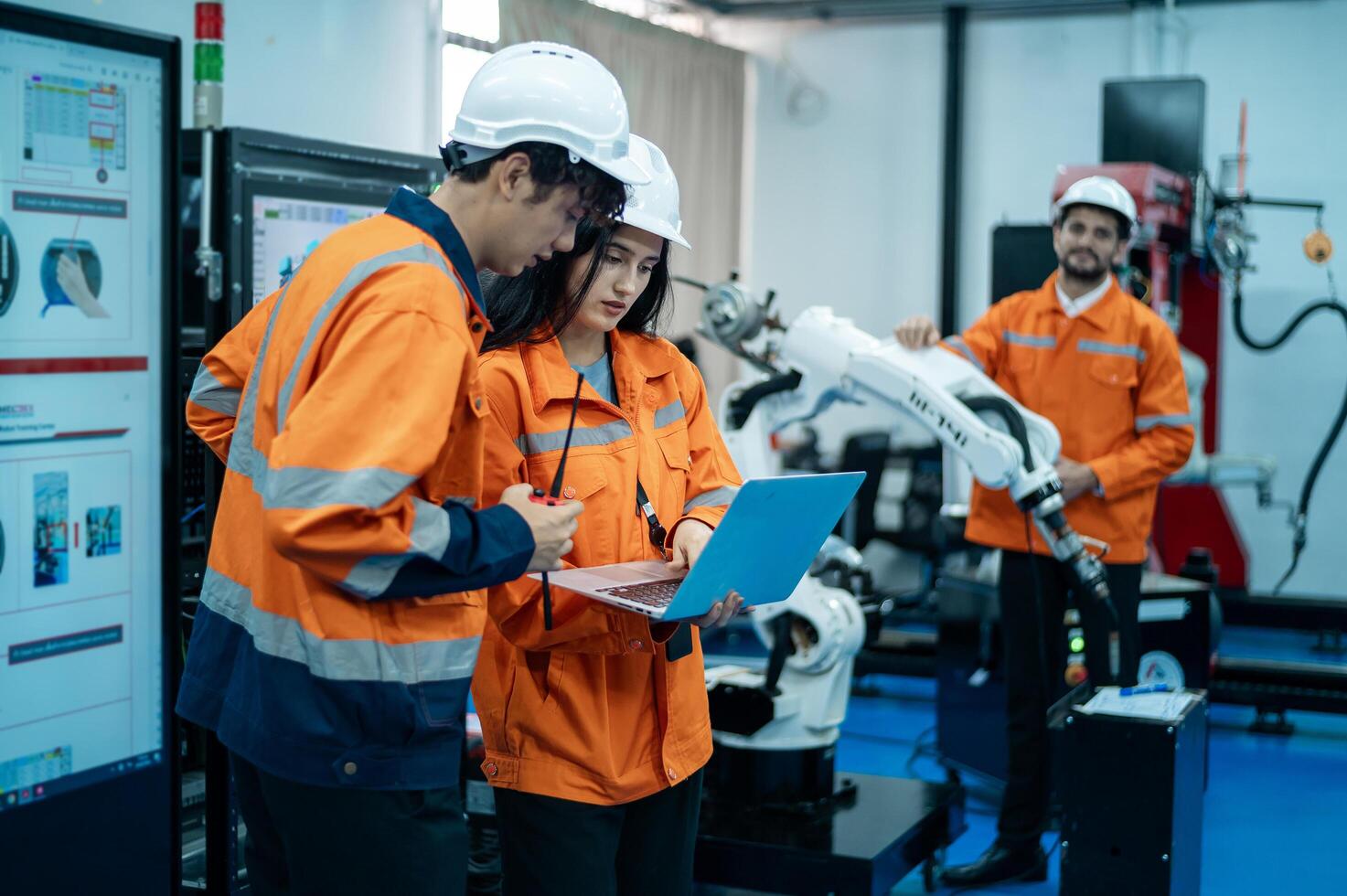
The widespread integration of artificial intelligence into the global economy has ignited one of the most critical debates of our time: will AI lead to mass unemployment, or will it be an engine for new forms of prosperity? The narrative of "human versus machine" is a compelling one, but it is ultimately inaccurate.
The impact of AI is not a simple story of job loss. Instead, it is a story of profound job transformation. AI is not just automating old tasks; it is actively augmenting human roles and creating entirely new professions that were unimaginable a decade ago. This shift is catalyzing the "Workforce 4.0" era, a new period defined by human-AI collaboration and a fundamental change in the skills that the market values.
The Reality of Augmentation, Not Just Replacement
The primary fear surrounding AI is that it will automate routine, cognitive tasks, displacing workers like administrative assistants, customer service agents, and even entry-level programmers. There is truth to this; tasks that are repetitive, data-heavy, and follow predictable rules are being automated.
However, the more significant impact is job augmentation. AI is emerging as a "copilot," a digital assistant that works alongside a human, handling the drudgery to free up the human for high-value work.
A developer uses an AI copilot to write 80% of the routine code, allowing them to focus on complex system architecture and creative problem-solving.
A marketer uses AI to analyze terabytes of customer data, freeing them to design the strategic and creative-driven campaigns that the data suggests.
A doctor uses AI to analyze a medical scan to identify potential tumors, giving them more time to focus on complex diagnosis and direct patient care.
In this model, the human's role shifts from a "doer" to a "director." The AI handles the "how," allowing the human to focus on the "what" and "why."
The New Collar: Jobs Created by AI
Just as the rise of the automobile created new jobs like mechanics and highway engineers, the rise of AI is creating an entire ecosystem of new "new collar" professions. These roles are not just for data scientists; they are for people who can build, manage, and bridge the gap between human intent and machine capability.
Key new jobs include:
AI Trainer / AI Auditor: AI models are not "smart" out of the box. They must be trained on high-quality data and, more importantly, have their outputs checked for accuracy, bias, and safety. AI trainers provide this "human-in-the-loop" feedback, essentially teaching the AI.
Prompt Engineer: A new, hybrid role that combines the skills of a linguist, a programmer, and a psychologist. A prompt engineer's job is to craft the precise questions and instructions needed to get the most accurate, relevant, and creative output from a generative AI.
AI Ethicist and Governance Specialist: As AI becomes more powerful, companies need experts to ensure its use is fair, transparent, and compliant with regulations. These professionals are the "guardrails" for AI, tackling complex issues of algorithmic bias and data privacy.
AI Integration Specialist: These are the "plumbers" of the new economy, specializing in connecting powerful AI platforms with a company's existing software, such as their CRM, logistics, and finance systems.
The New Mandate: A Fundamental Shift in Workforce Skills
For the vast majority of the workforce, the impact of AI is a fundamental change in the skills required to be successful. As AI and automation handle more of the technical and repetitive tasks, "human-centric" skills—often dismissed as "soft skills"—have become the most valuable and in-demand competencies.
1. AI and Digital Literacy
This is the new baseline for all employees, equivalent to computer literacy in the 1990s. "AI literacy" is the ability to comfortably and effectively use AI tools, like a copilot or a chatbot, to perform one's job. It is no longer a specialized skill but a universal requirement.
2. Critical Thinking and Analytical Judgment
This is perhaps the most critical skill in the AI era. AI models can "hallucinate" and present misinformation with complete confidence. The human's job is to act as the editor, the validator, and the critical thinker. The AI can generate a 10-page report, but the human must have the judgment to know if it is accurate, relevant, and strategically sound.
3. Creativity and Complex Problem-Solving
AI is excellent at optimizing known processes and providing answers based on existing data. It is not, however, good at asking new questions or solving novel, complex problems. The human workforce is now valued for its creativity—the ability to ask "what if," to think outside the box, and to navigate situations where no data exists.
4. Emotional Intelligence and Communication
AI can simulate a conversation, but it cannot build a relationship, show genuine empathy, earn a client's trust, or inspire a team. As AI automates the administrative side of work, the human-to-human connection becomes the primary value. Leadership, collaboration, and empathetic communication are skills that AI cannot replicate.
5. Adaptability and Lifelong Learning
Because AI technology is evolving at an exponential rate, the most durable skill of all is the ability to learn. The jobs and tools of today will be different in five years. The most resilient and successful members of Workforce 4.0 will be those who embrace a mindset of continuous "upskilling" and "reskilling," treating their career as a journey of lifelong learning.
The impact of AI is not a simple story of job loss. Instead, it is a story of profound job transformation. AI is not just automating old tasks; it is actively augmenting human roles and creating entirely new professions that were unimaginable a decade ago. This shift is catalyzing the "Workforce 4.0" era, a new period defined by human-AI collaboration and a fundamental change in the skills that the market values.
The Reality of Augmentation, Not Just Replacement
The primary fear surrounding AI is that it will automate routine, cognitive tasks, displacing workers like administrative assistants, customer service agents, and even entry-level programmers. There is truth to this; tasks that are repetitive, data-heavy, and follow predictable rules are being automated.
However, the more significant impact is job augmentation. AI is emerging as a "copilot," a digital assistant that works alongside a human, handling the drudgery to free up the human for high-value work.
A developer uses an AI copilot to write 80% of the routine code, allowing them to focus on complex system architecture and creative problem-solving.
A marketer uses AI to analyze terabytes of customer data, freeing them to design the strategic and creative-driven campaigns that the data suggests.
A doctor uses AI to analyze a medical scan to identify potential tumors, giving them more time to focus on complex diagnosis and direct patient care.
In this model, the human's role shifts from a "doer" to a "director." The AI handles the "how," allowing the human to focus on the "what" and "why."
The New Collar: Jobs Created by AI
Just as the rise of the automobile created new jobs like mechanics and highway engineers, the rise of AI is creating an entire ecosystem of new "new collar" professions. These roles are not just for data scientists; they are for people who can build, manage, and bridge the gap between human intent and machine capability.
Key new jobs include:
AI Trainer / AI Auditor: AI models are not "smart" out of the box. They must be trained on high-quality data and, more importantly, have their outputs checked for accuracy, bias, and safety. AI trainers provide this "human-in-the-loop" feedback, essentially teaching the AI.
Prompt Engineer: A new, hybrid role that combines the skills of a linguist, a programmer, and a psychologist. A prompt engineer's job is to craft the precise questions and instructions needed to get the most accurate, relevant, and creative output from a generative AI.
AI Ethicist and Governance Specialist: As AI becomes more powerful, companies need experts to ensure its use is fair, transparent, and compliant with regulations. These professionals are the "guardrails" for AI, tackling complex issues of algorithmic bias and data privacy.
AI Integration Specialist: These are the "plumbers" of the new economy, specializing in connecting powerful AI platforms with a company's existing software, such as their CRM, logistics, and finance systems.
The New Mandate: A Fundamental Shift in Workforce Skills
For the vast majority of the workforce, the impact of AI is a fundamental change in the skills required to be successful. As AI and automation handle more of the technical and repetitive tasks, "human-centric" skills—often dismissed as "soft skills"—have become the most valuable and in-demand competencies.
1. AI and Digital Literacy
This is the new baseline for all employees, equivalent to computer literacy in the 1990s. "AI literacy" is the ability to comfortably and effectively use AI tools, like a copilot or a chatbot, to perform one's job. It is no longer a specialized skill but a universal requirement.
2. Critical Thinking and Analytical Judgment
This is perhaps the most critical skill in the AI era. AI models can "hallucinate" and present misinformation with complete confidence. The human's job is to act as the editor, the validator, and the critical thinker. The AI can generate a 10-page report, but the human must have the judgment to know if it is accurate, relevant, and strategically sound.
3. Creativity and Complex Problem-Solving
AI is excellent at optimizing known processes and providing answers based on existing data. It is not, however, good at asking new questions or solving novel, complex problems. The human workforce is now valued for its creativity—the ability to ask "what if," to think outside the box, and to navigate situations where no data exists.
4. Emotional Intelligence and Communication
AI can simulate a conversation, but it cannot build a relationship, show genuine empathy, earn a client's trust, or inspire a team. As AI automates the administrative side of work, the human-to-human connection becomes the primary value. Leadership, collaboration, and empathetic communication are skills that AI cannot replicate.
5. Adaptability and Lifelong Learning
Because AI technology is evolving at an exponential rate, the most durable skill of all is the ability to learn. The jobs and tools of today will be different in five years. The most resilient and successful members of Workforce 4.0 will be those who embrace a mindset of continuous "upskilling" and "reskilling," treating their career as a journey of lifelong learning.