AI in Retail Personalized Shopping and Smart Inventory
By Zeeshan Ahmed Team • Sep 27, 2025
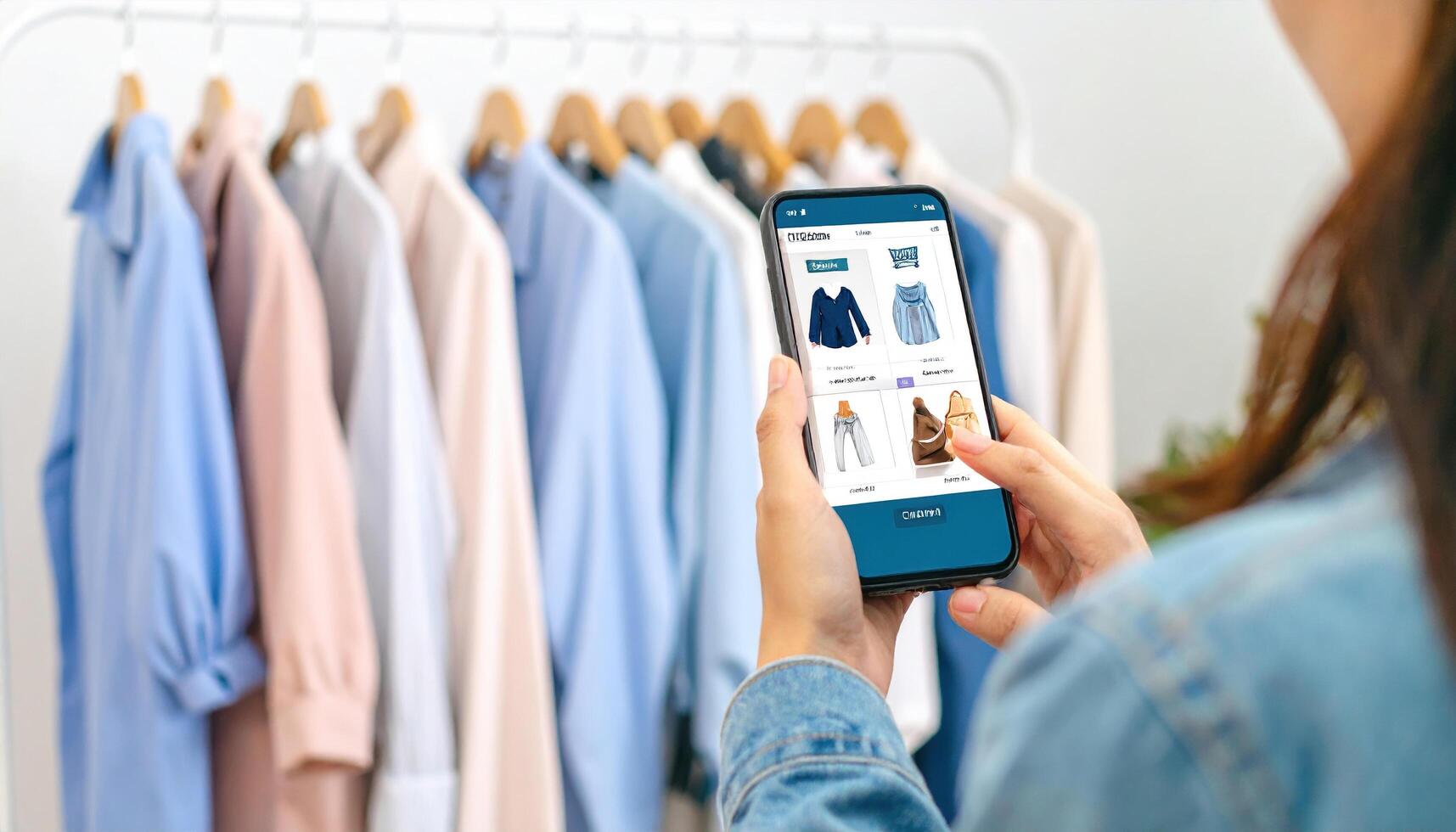
In the hyper-competitive retail landscape, success is no longer just about location or price. It is defined by two core principles: providing a one-to-one, personalized customer experience and having the exact product the customer wants, at the exact moment they want it. Artificial intelligence is the transformative technology that makes both of these possible. AI acts as a dual engine, powering a highly engaging, customer-facing experience while simultaneously running a hyper-efficient, predictive "smart inventory" system on the back end.
Part 1: The AI-Powered Personalized Shopping Experience
The modern customer expects to be understood. Generic, one-size-fits-all marketing and product assortments are no longer effective. AI allows retailers to move beyond basic segmentation and into the realm of true "hyper-personalization," making each customer's journey unique.
The Intelligent Recommendation Engine
This is the most powerful and familiar form of AI in retail. It has evolved far beyond the simple "customers who bought this also bought" feature. Modern AI recommendation engines act as a personal shopper by synthesizing a vast range of data in real-time, including:
Behavioral Data: What a customer has browsed, clicked on, and how long they spent on a page.
Transactional Data: All past purchase and return history.
Contextual Data: The customer's location, the time of day, and even the local weather.
Collaborative Filtering: The behavior of millions of other "lookalike" customers.
By processing these signals, the AI does not just show a customer what they have looked for; it predicts what they will want next. This is the engine that famously drives a massive percentage of sales for e-commerce giants.
Virtual Assistants and AI Stylists
AI-powered chatbots have evolved from simple "FAQ" bots into sophisticated virtual assistants. Using advanced natural language processing (NLP), these assistants can:
Understand Complex Intent: A customer can type, "I am looking for a black dress for an outdoor wedding next month," and the AI can understand the nuances of "formal," "outdoor," and "future date" to provide appropriate recommendations.
Provide 24/7 Support: These bots handle complex tasks like processing returns, tracking orders, and answering product-specific questions instantly, at any time of day.
Act as Personal Shoppers: In fashion and home decor, AI-powered "stylists" can curate entire outfits or room designs based on a customer's style preferences, which can be learned from a quiz or even a social media board.
Personalization in Brick-and-Mortar Stores
AI is also bridging the gap between digital and physical shopping. Computer vision is being deployed in stores to create:
Smart Mirrors: These allow a customer to virtually "try on" dozens of outfits in seconds without ever entering a fitting room.
Visual Search: A customer can take a picture of an item they like, and in-store kiosks or a mobile app can instantly locate that product or visually similar alternatives in the store.
Optimized Layouts: AI analyzes in-store camera feeds to create "heat maps" of customer traffic, showing which displays are effective and where bottlenecks occur. This allows managers to optimize the store layout to improve the customer's journey and place high-margin items in high-traffic zones.
Part 2: The Unseen Engine: Smart Inventory Management
A perfect recommendation is useless if the product is out of stock. AI's second, and arguably more critical, role in retail is to completely overhaul inventory and supply chain management, moving it from a reactive, "best guess" model to a predictive, automated system.
Predictive Demand Forecasting
This is the most valuable function of AI on the back end. Traditionally, inventory managers would order stock based on last year's sales. This model was notoriously inaccurate, leading to costly overstocking or profit-losing stockouts.
AI-powered demand forecasting is far more sophisticated. Its models analyze dozens of variables to predict demand with incredible accuracy:
Historical Sales Data: The obvious baseline.
Seasonality and Trends: Identifying macro trends in fashion or electronics.
External Factors: Predicting a surge in umbrella sales based on a 10-day weather forecast, or a run on a specific snack food by correlating it with a local sporting event.
Social Media Sentiment: Tracking products that are suddenly trending on social media.
By using AI, retailers have seen reductions in forecasting errors by up to 50%, ensuring they have the right amount of product at all times.
Automated and Optimized Replenishment
The AI's forecast feeds directly into an automated replenishment system. This system prevents both of the great inventory costly:
Preventing Stockouts: The AI automatically triggers a new order to the supplier when a product's stock hits a pre-determined, intelligently calculated level, ensuring it is restocked before the last item is sold. This has been shown to cut lost sales from stockouts by up to 65%.
Preventing Overstocking: The AI also prevents "capital death" from over-ordering a product whose trend is fading. This saves businesses from tying up cash in unsold goods and avoids the need for heavy, margin-killing markdowns.
Real-Time In-Store Inventory Accuracy
A common problem for retailers is "phantom inventory," where a computer thinks an item is in stock, but it is actually lost, stolen, or misplaced. AI-powered computer vision is solving this. Autonomous robots or drones can be deployed to scan store shelves overnight, using cameras to count every single item. This provides a 99%+ accurate, real-time inventory count every morning, flagging out-of-stock items and even identifying products that are simply in the wrong place.
Part 1: The AI-Powered Personalized Shopping Experience
The modern customer expects to be understood. Generic, one-size-fits-all marketing and product assortments are no longer effective. AI allows retailers to move beyond basic segmentation and into the realm of true "hyper-personalization," making each customer's journey unique.
The Intelligent Recommendation Engine
This is the most powerful and familiar form of AI in retail. It has evolved far beyond the simple "customers who bought this also bought" feature. Modern AI recommendation engines act as a personal shopper by synthesizing a vast range of data in real-time, including:
Behavioral Data: What a customer has browsed, clicked on, and how long they spent on a page.
Transactional Data: All past purchase and return history.
Contextual Data: The customer's location, the time of day, and even the local weather.
Collaborative Filtering: The behavior of millions of other "lookalike" customers.
By processing these signals, the AI does not just show a customer what they have looked for; it predicts what they will want next. This is the engine that famously drives a massive percentage of sales for e-commerce giants.
Virtual Assistants and AI Stylists
AI-powered chatbots have evolved from simple "FAQ" bots into sophisticated virtual assistants. Using advanced natural language processing (NLP), these assistants can:
Understand Complex Intent: A customer can type, "I am looking for a black dress for an outdoor wedding next month," and the AI can understand the nuances of "formal," "outdoor," and "future date" to provide appropriate recommendations.
Provide 24/7 Support: These bots handle complex tasks like processing returns, tracking orders, and answering product-specific questions instantly, at any time of day.
Act as Personal Shoppers: In fashion and home decor, AI-powered "stylists" can curate entire outfits or room designs based on a customer's style preferences, which can be learned from a quiz or even a social media board.
Personalization in Brick-and-Mortar Stores
AI is also bridging the gap between digital and physical shopping. Computer vision is being deployed in stores to create:
Smart Mirrors: These allow a customer to virtually "try on" dozens of outfits in seconds without ever entering a fitting room.
Visual Search: A customer can take a picture of an item they like, and in-store kiosks or a mobile app can instantly locate that product or visually similar alternatives in the store.
Optimized Layouts: AI analyzes in-store camera feeds to create "heat maps" of customer traffic, showing which displays are effective and where bottlenecks occur. This allows managers to optimize the store layout to improve the customer's journey and place high-margin items in high-traffic zones.
Part 2: The Unseen Engine: Smart Inventory Management
A perfect recommendation is useless if the product is out of stock. AI's second, and arguably more critical, role in retail is to completely overhaul inventory and supply chain management, moving it from a reactive, "best guess" model to a predictive, automated system.
Predictive Demand Forecasting
This is the most valuable function of AI on the back end. Traditionally, inventory managers would order stock based on last year's sales. This model was notoriously inaccurate, leading to costly overstocking or profit-losing stockouts.
AI-powered demand forecasting is far more sophisticated. Its models analyze dozens of variables to predict demand with incredible accuracy:
Historical Sales Data: The obvious baseline.
Seasonality and Trends: Identifying macro trends in fashion or electronics.
External Factors: Predicting a surge in umbrella sales based on a 10-day weather forecast, or a run on a specific snack food by correlating it with a local sporting event.
Social Media Sentiment: Tracking products that are suddenly trending on social media.
By using AI, retailers have seen reductions in forecasting errors by up to 50%, ensuring they have the right amount of product at all times.
Automated and Optimized Replenishment
The AI's forecast feeds directly into an automated replenishment system. This system prevents both of the great inventory costly:
Preventing Stockouts: The AI automatically triggers a new order to the supplier when a product's stock hits a pre-determined, intelligently calculated level, ensuring it is restocked before the last item is sold. This has been shown to cut lost sales from stockouts by up to 65%.
Preventing Overstocking: The AI also prevents "capital death" from over-ordering a product whose trend is fading. This saves businesses from tying up cash in unsold goods and avoids the need for heavy, margin-killing markdowns.
Real-Time In-Store Inventory Accuracy
A common problem for retailers is "phantom inventory," where a computer thinks an item is in stock, but it is actually lost, stolen, or misplaced. AI-powered computer vision is solving this. Autonomous robots or drones can be deployed to scan store shelves overnight, using cameras to count every single item. This provides a 99%+ accurate, real-time inventory count every morning, flagging out-of-stock items and even identifying products that are simply in the wrong place.