How AI is Transforming Global Industries in 2025
By Zeeshan Ahmed Team • Sep 27, 2025
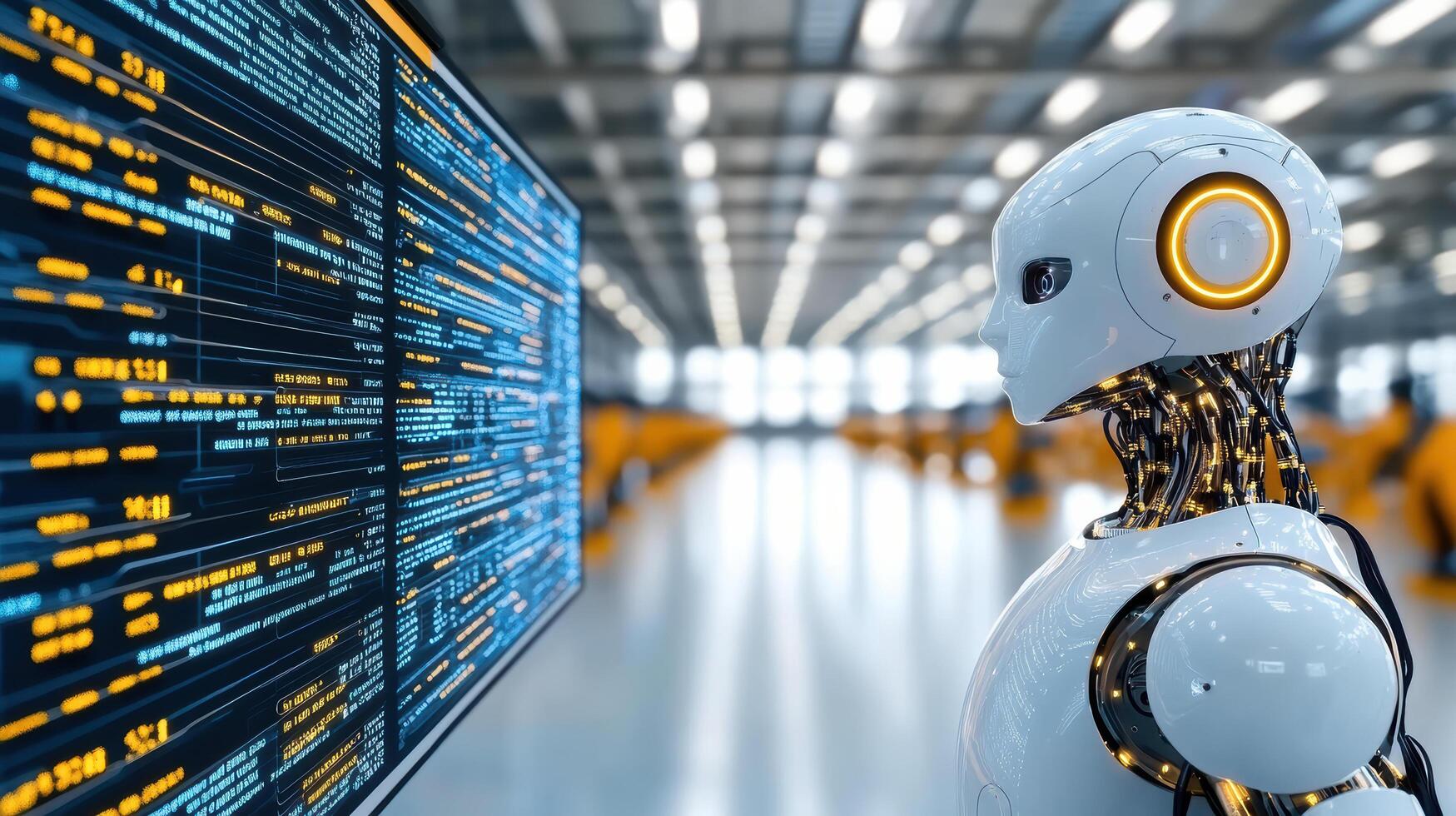
In 2025, artificial intelligence has fundamentally shifted from a futuristic concept to a core component of global industry. The conversation is no longer about the potential of AI, but about its practical implementation, measurable return on investment (ROI), and the strategic redesign of business operations. Generative AI, which entered the public consciousness just a few years prior, is now being embedded into specific workflows, creating a new generation of efficiency and capability.
This transformation is not uniform; it is a story of specific, powerful applications tailored to the unique challenges of each sector. From predictive healthcare to autonomous supply chains, AI is the new engine of the global economy.
Healthcare: From Reactive to Predictive Care
The healthcare industry in 2025 is leveraging AI to improve patient outcomes, reduce administrative burdens, and personalize medicine at an unprecedented scale.
Clinical and Diagnostic AI: AI models, particularly those using deep learning, are now routinely used to analyze medical images like X-rays, CT scans, and MRIs. They can detect signs of diseases such as cancer or diabetic retinopathy with a level of accuracy that often meets or exceeds that of human radiologists. This is not replacing clinicians but augmenting them, allowing for faster and more accurate diagnoses.
Administrative Automation: One of the most significant impacts is on the administrative side. AI-powered "ambient clinical intelligence" systems listen to doctor-patient conversations (with consent) and automatically generate clinical notes, fill out forms, and suggest billing codes. This frees physicians from hours of daily paperwork, reducing burnout and allowing them to focus entirely on the patient.
Personalized Treatment Plans: AI is driving the shift toward predictive and personalized medicine. By analyzing a patient's genetic data, lifestyle factors, and real-time biometric data from wearables, algorithms can predict their risk for specific diseases. This allows for proactive, preventative interventions rather than reactive treatment. For rare diseases, AI can sift through vast databases of medical literature and genomic data to identify potential novel treatments or drug repurposing opportunities.
Drug Discovery: AI has drastically accelerated pharmaceutical research. Machine learning models can predict how molecules will interact, simulating complex biological systems that would be impossible to test in a lab. This allows researchers to identify promising drug candidates in a fraction of the time, lowering the cost and speeding the development of new therapies.
Finance: Redefining Security and Personalization
The financial sector, built on data and risk, has become a primary beneficiary of AI's analytical power. In 2025, AI is the backbone of operational efficiency, security, and customer experience.
Advanced Fraud Detection: AI systems monitor millions of transactions in real-time. They learn the normal spending patterns of individual customers and can instantly flag anomalies that suggest fraudulent activity. This goes beyond simple rule-based alerts; the AI understands context, such as location and purchase type, to reduce false positives and stop fraud before it happens.
Algorithmic Trading and Risk: Quantitative analysts use sophisticated machine learning models to analyze market data, news sentiment, and geopolitical events to predict stock price movements. In risk management, AI runs complex simulations (known as "stress tests") to model how a bank's portfolio would perform under various economic crises, providing a much clearer picture of financial exposure.
Hyper-Personalized Banking: Customer service is being revolutionized. AI-powered chatbots and virtual assistants handle the majority of routine customer inquiries 24/7. More advanced AI analyzes a customer's entire financial history to offer proactive advice, such as suggesting a different savings plan based on spending habits or identifying an opportunity to refinance a loan at a better rate.
Credit and Lending: The loan application process is now faster and more equitable. AI models can assess creditworthiness by analyzing thousands of data points beyond a simple credit score. This provides a more holistic view of an applicant's financial health, opening up access to credit for individuals who might have been overlooked by traditional systems.
Manufacturing and Supply Chain: The Autonomous Revolution
In 2025, the vision of the "smart factory" and the autonomous supply chain is a reality. AI is the central nervous system that connects manufacturing, logistics, and inventory into a single, intelligent organism.
Predictive Maintenance: Sensors on factory machinery constantly stream data to an AI platform. The AI learns the normal operating signature of each machine and can predict a failure weeks or even months before it occurs. This allows maintenance to be scheduled precisely when needed, eliminating costly unplanned downtime and extending the life of expensive equipment.
Intelligent Automation: Autonomous Mobile Robots (AMRs) navigate factory and warehouse floors, moving materials, picking orders, and performing quality checks. Unlike older automated guided vehicles (AGVs), these AMRs use computer vision and machine learning to dynamically map their surroundings, safely avoiding obstacles and collaborating with human workers.
Digital Twins: Companies now create "digital twins"—exact virtual replicas of their entire supply chain. They can run AI-powered simulations on this twin to see what would happen if a port closes, a supplier is delayed, or demand suddenly spikes. This allows them to identify bottlenecks and build more resilient and agile supply networks before a crisis hits.
Demand Forecasting: AI provides vastly more accurate demand forecasting. By analyzing not just historical sales but also weather patterns, social media trends, competitor pricing, and economic indicators, AI can predict consumer demand for specific products with remarkable accuracy. This prevents both costly overstocking and a loss of sales from items being out of stock.
Retail and E-commerce: The Hyper-Personalized Storefront
AI has become the engine of personalization in the retail sector. It curates the shopping experience for every individual, both online and in physical stores.
Recommendation Engines: The "you might also like" feature has evolved into a sophisticated AI-driven service. These systems analyze a user's browse history, past purchases, and even how long they looked at an item. It compares this behavior to millions of other shoppers to create a unique, personalized storefront for every visitor, driving sales and customer loyalty.
Dynamic Pricing: AI algorithms adjust product prices in real-time based on a host of factors. These include competitor pricing, inventory levels, time of day, and demand. This allows e-commerce platforms to maximize revenue, clear old stock, and remain competitive at all times.
AI Shopping Assistants: Generative AI has created a new class of virtual shopping assistants. Customers can use natural language to ask complex questions like, "I'm looking for a blue dress for an outdoor wedding next month with a budget of $150." The AI can understand the intent, ask clarifying questions, and present a curated list of options, mimicking the experience of a human personal shopper.
Visual Search: Shoppers can now take a picture of an item they see in the real world and upload it to a retail app. The AI's computer vision identifies the product—or visually similar alternatives—and provides a direct link to purchase it, seamlessly bridging the gap between the physical and digital worlds.
This transformation is not uniform; it is a story of specific, powerful applications tailored to the unique challenges of each sector. From predictive healthcare to autonomous supply chains, AI is the new engine of the global economy.
Healthcare: From Reactive to Predictive Care
The healthcare industry in 2025 is leveraging AI to improve patient outcomes, reduce administrative burdens, and personalize medicine at an unprecedented scale.
Clinical and Diagnostic AI: AI models, particularly those using deep learning, are now routinely used to analyze medical images like X-rays, CT scans, and MRIs. They can detect signs of diseases such as cancer or diabetic retinopathy with a level of accuracy that often meets or exceeds that of human radiologists. This is not replacing clinicians but augmenting them, allowing for faster and more accurate diagnoses.
Administrative Automation: One of the most significant impacts is on the administrative side. AI-powered "ambient clinical intelligence" systems listen to doctor-patient conversations (with consent) and automatically generate clinical notes, fill out forms, and suggest billing codes. This frees physicians from hours of daily paperwork, reducing burnout and allowing them to focus entirely on the patient.
Personalized Treatment Plans: AI is driving the shift toward predictive and personalized medicine. By analyzing a patient's genetic data, lifestyle factors, and real-time biometric data from wearables, algorithms can predict their risk for specific diseases. This allows for proactive, preventative interventions rather than reactive treatment. For rare diseases, AI can sift through vast databases of medical literature and genomic data to identify potential novel treatments or drug repurposing opportunities.
Drug Discovery: AI has drastically accelerated pharmaceutical research. Machine learning models can predict how molecules will interact, simulating complex biological systems that would be impossible to test in a lab. This allows researchers to identify promising drug candidates in a fraction of the time, lowering the cost and speeding the development of new therapies.
Finance: Redefining Security and Personalization
The financial sector, built on data and risk, has become a primary beneficiary of AI's analytical power. In 2025, AI is the backbone of operational efficiency, security, and customer experience.
Advanced Fraud Detection: AI systems monitor millions of transactions in real-time. They learn the normal spending patterns of individual customers and can instantly flag anomalies that suggest fraudulent activity. This goes beyond simple rule-based alerts; the AI understands context, such as location and purchase type, to reduce false positives and stop fraud before it happens.
Algorithmic Trading and Risk: Quantitative analysts use sophisticated machine learning models to analyze market data, news sentiment, and geopolitical events to predict stock price movements. In risk management, AI runs complex simulations (known as "stress tests") to model how a bank's portfolio would perform under various economic crises, providing a much clearer picture of financial exposure.
Hyper-Personalized Banking: Customer service is being revolutionized. AI-powered chatbots and virtual assistants handle the majority of routine customer inquiries 24/7. More advanced AI analyzes a customer's entire financial history to offer proactive advice, such as suggesting a different savings plan based on spending habits or identifying an opportunity to refinance a loan at a better rate.
Credit and Lending: The loan application process is now faster and more equitable. AI models can assess creditworthiness by analyzing thousands of data points beyond a simple credit score. This provides a more holistic view of an applicant's financial health, opening up access to credit for individuals who might have been overlooked by traditional systems.
Manufacturing and Supply Chain: The Autonomous Revolution
In 2025, the vision of the "smart factory" and the autonomous supply chain is a reality. AI is the central nervous system that connects manufacturing, logistics, and inventory into a single, intelligent organism.
Predictive Maintenance: Sensors on factory machinery constantly stream data to an AI platform. The AI learns the normal operating signature of each machine and can predict a failure weeks or even months before it occurs. This allows maintenance to be scheduled precisely when needed, eliminating costly unplanned downtime and extending the life of expensive equipment.
Intelligent Automation: Autonomous Mobile Robots (AMRs) navigate factory and warehouse floors, moving materials, picking orders, and performing quality checks. Unlike older automated guided vehicles (AGVs), these AMRs use computer vision and machine learning to dynamically map their surroundings, safely avoiding obstacles and collaborating with human workers.
Digital Twins: Companies now create "digital twins"—exact virtual replicas of their entire supply chain. They can run AI-powered simulations on this twin to see what would happen if a port closes, a supplier is delayed, or demand suddenly spikes. This allows them to identify bottlenecks and build more resilient and agile supply networks before a crisis hits.
Demand Forecasting: AI provides vastly more accurate demand forecasting. By analyzing not just historical sales but also weather patterns, social media trends, competitor pricing, and economic indicators, AI can predict consumer demand for specific products with remarkable accuracy. This prevents both costly overstocking and a loss of sales from items being out of stock.
Retail and E-commerce: The Hyper-Personalized Storefront
AI has become the engine of personalization in the retail sector. It curates the shopping experience for every individual, both online and in physical stores.
Recommendation Engines: The "you might also like" feature has evolved into a sophisticated AI-driven service. These systems analyze a user's browse history, past purchases, and even how long they looked at an item. It compares this behavior to millions of other shoppers to create a unique, personalized storefront for every visitor, driving sales and customer loyalty.
Dynamic Pricing: AI algorithms adjust product prices in real-time based on a host of factors. These include competitor pricing, inventory levels, time of day, and demand. This allows e-commerce platforms to maximize revenue, clear old stock, and remain competitive at all times.
AI Shopping Assistants: Generative AI has created a new class of virtual shopping assistants. Customers can use natural language to ask complex questions like, "I'm looking for a blue dress for an outdoor wedding next month with a budget of $150." The AI can understand the intent, ask clarifying questions, and present a curated list of options, mimicking the experience of a human personal shopper.
Visual Search: Shoppers can now take a picture of an item they see in the real world and upload it to a retail app. The AI's computer vision identifies the product—or visually similar alternatives—and provides a direct link to purchase it, seamlessly bridging the gap between the physical and digital worlds.